

Willows and Hidden Stories: A Russian River Source to Sea Journey
By: Will Hubert and Billy Uhlhorn-Thornton | Rivers for Change Ambassadors
The Russian River is a life-giving river. Its aquifers run deep, filtering water through gravel beds that stretch hundreds of feet below the surface. Its cold currents are ancestral spawning grounds for Steelhead and Coho Salmon. And its floodplains and gravel bars are the ancestral home of Pomo and Coast Miwok people, who have lived here since time immemorial and who continue to fight for their sovereignty amidst expanding suburbs, vineyards, and gravel mines.
Today, a multiplicity of stakeholders lay claim to this river: industries, farmers, local governments, homeowners, recreationists, and Native people who have always stewarded this watershed. Some siphon its waters for altruistic reasons, others for profit. Still, the river gives us life. It offers clean water for drinking and swimming, it sustains communities and wildlife, and it pushes willfully toward the Pacific Ocean.
Yet, like so many rivers across the West, it is under stress. Trash piles up along its banks. Wild salmon and steelhead runs are on the brink. Gravel mining depletes the aquifer. Toxic sludge and invasive growth choke channels. The Russian River needs our attention and care.
This year, my friend Billy and I set out to paddle all 115 miles of it, from Lake Mendocino to the sea. Not in a single epic push, but in sections — weekends strung together into one long conversation with the river. Because in truth, this journey isn’t just about distance. It’s about persistence, resilience, and listening to the messy intersection of human history and wild water.
Into the Willows
The plan was simple: paddle from Ukiah to Healdsburg, tracing the first 50 miles on our way toward a full Source to Sea descent. But the river had other plans.
From the very first miles, the corridor between Ukiah and Hopland tested us. Narrow, tangled, and clogged with willows and driftwood, it became less a river and more a maze. Every mile demanded another portage. What was meant to be a steady float turned into a gauntlet of dragging boats, clambering over logjams, and rerouting through strainers.
We were grateful for the loan of a twelve-foot blue inflatable kayak from Don McEnhill of Russian Riverkeeper. But gratitude alone didn’t make it easier to move. Shaped like a canoe and not self-bailing, the boat demanded vigilance. Each portage meant fully de-rigging, hauling the gear through willows and barbed wire, lining the boat into an eddy-less corridor, and re-rigging before blasting into another mess of branches. After nine miles and nine portages, we were already sore, scraped, and laughing at the absurdity of it all.
Camp that first night was in a floodplain littered with rusting cars — a reminder that this landscape carries scars as well as beauty.
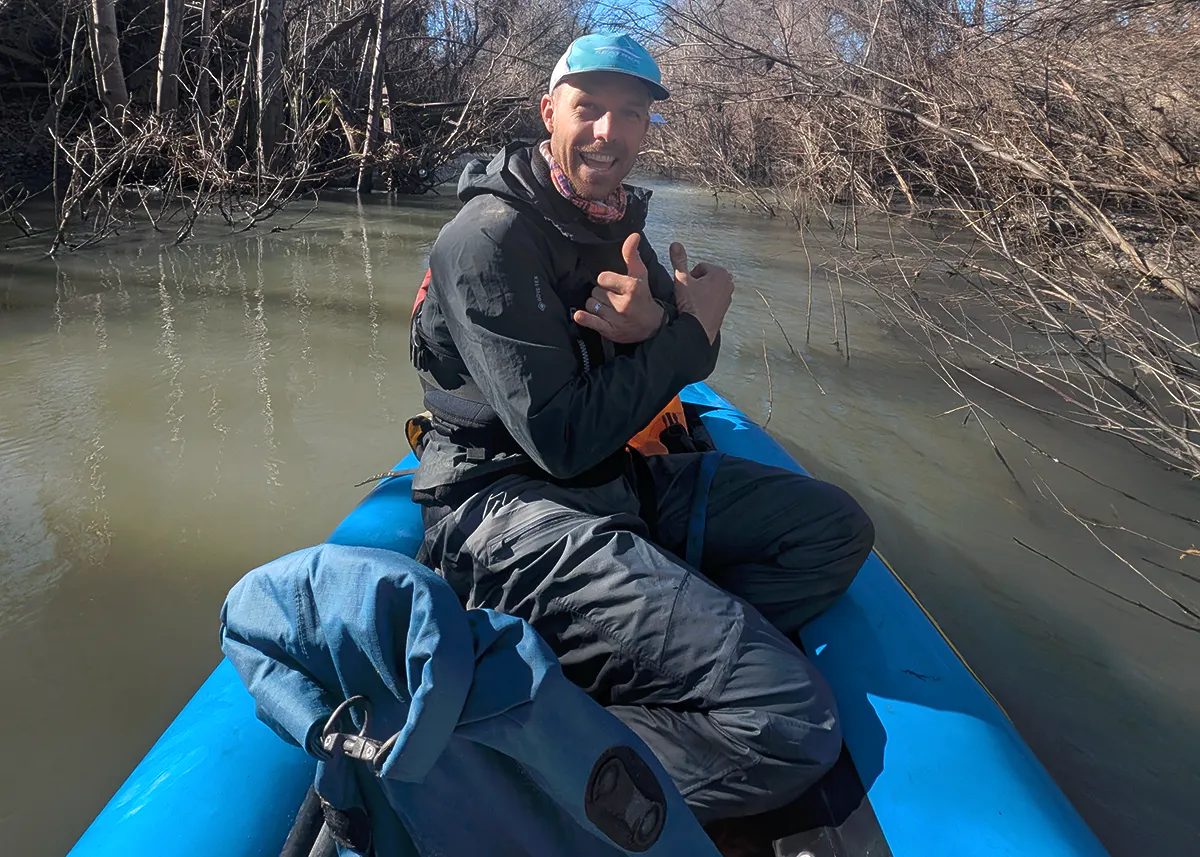
Navigating endless willows, strainers, and blind turns from Ukiah to Hopland.
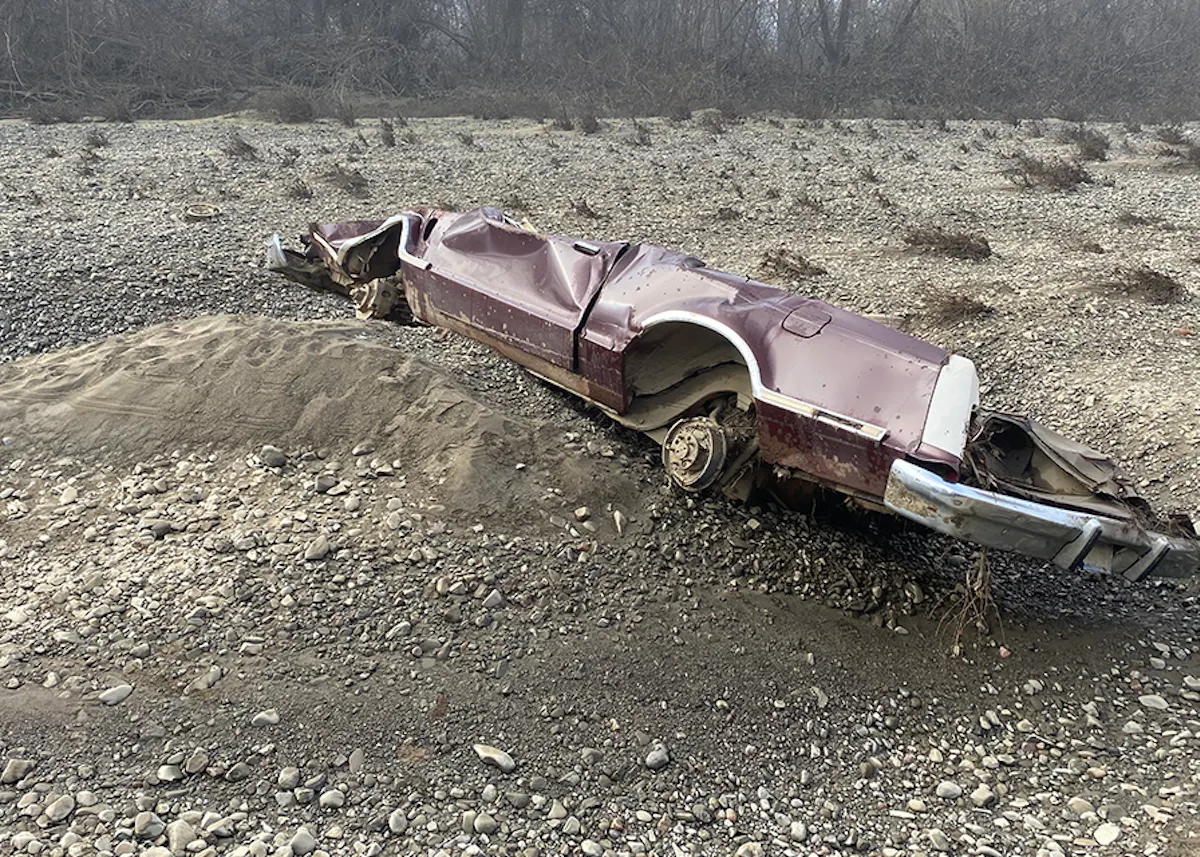
Old car in the floodplain (one of many).
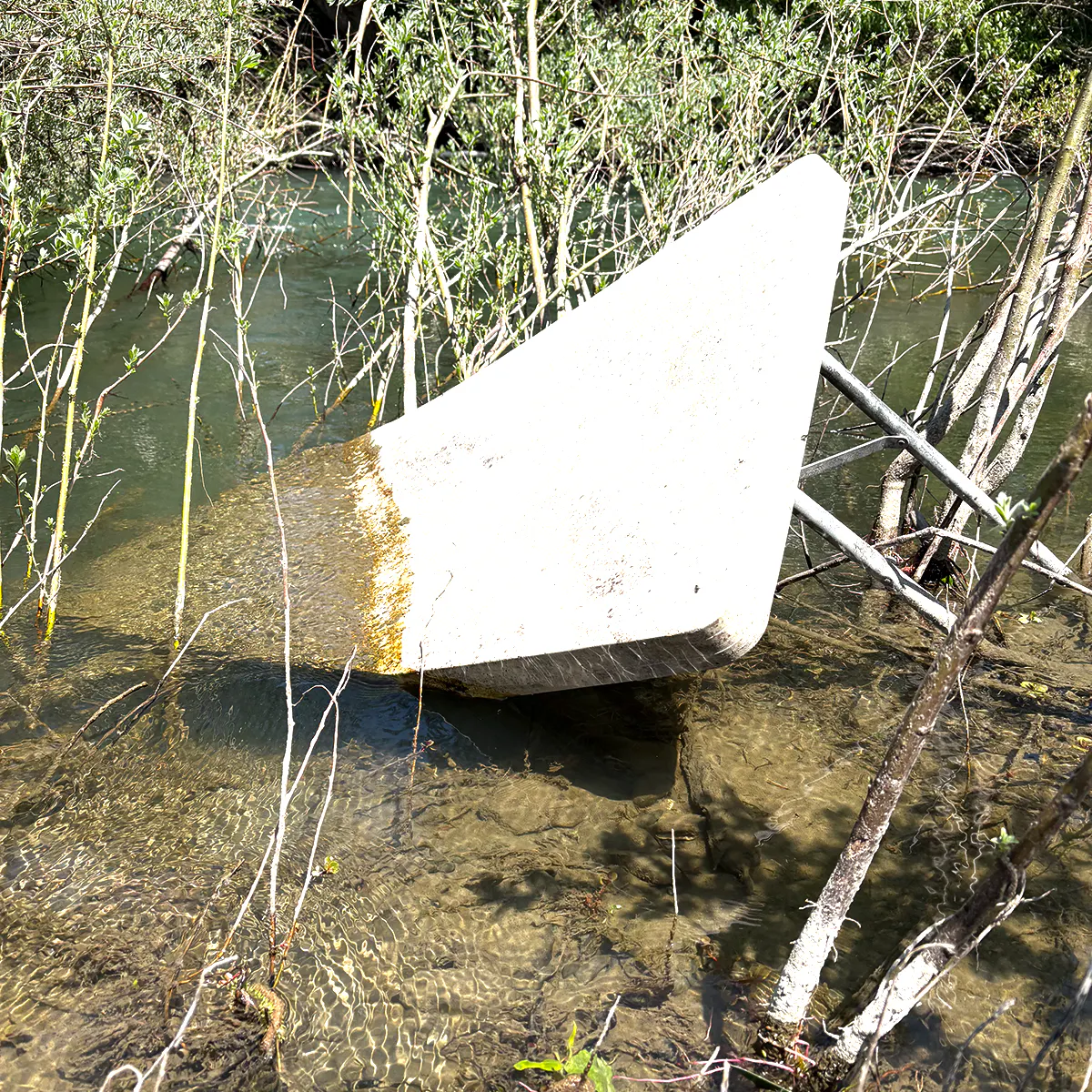
Trash; a common sight in the Russian River.
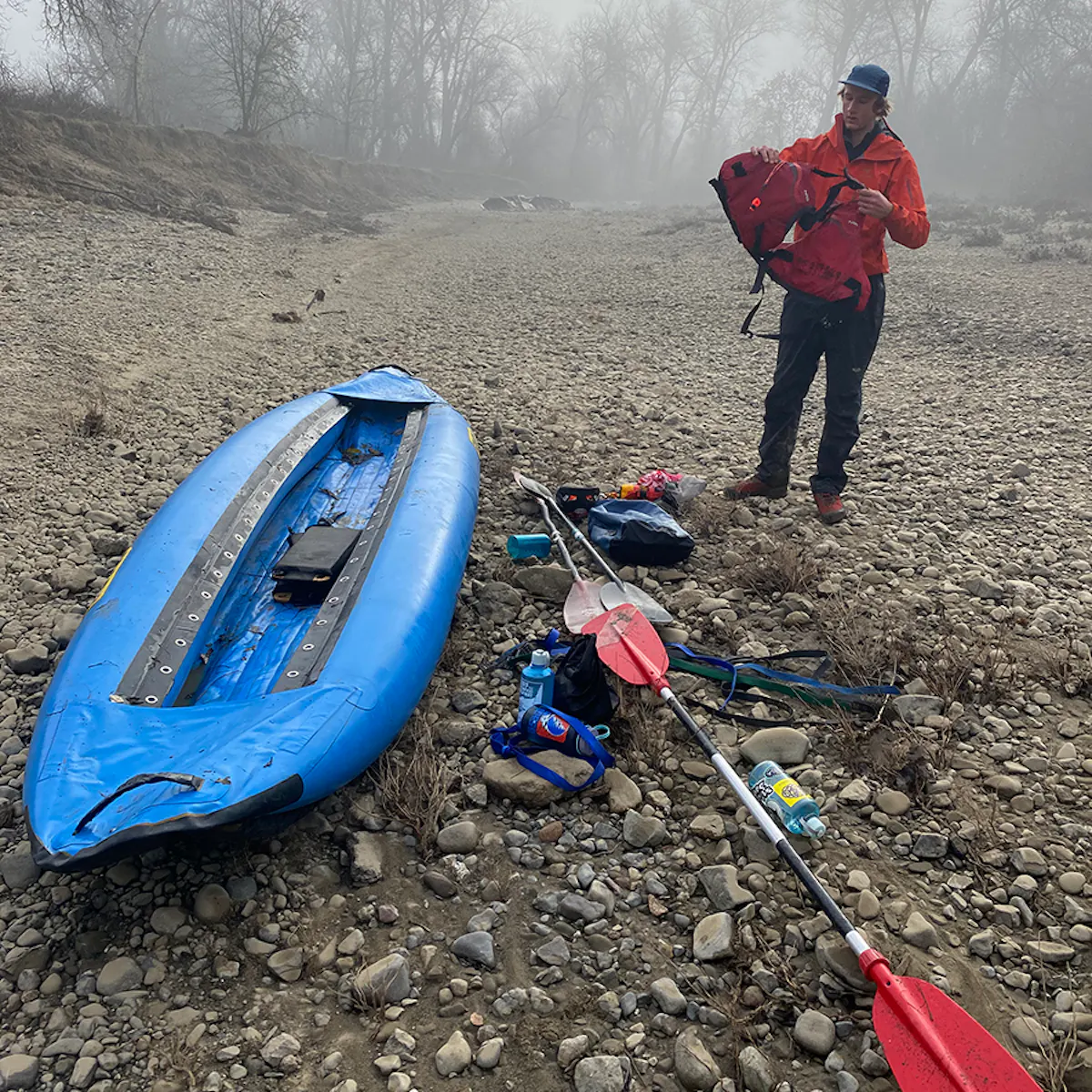
Rigging our “blue canoe” on day two after camping in the floodplain our first night.
Boneyard Rapid
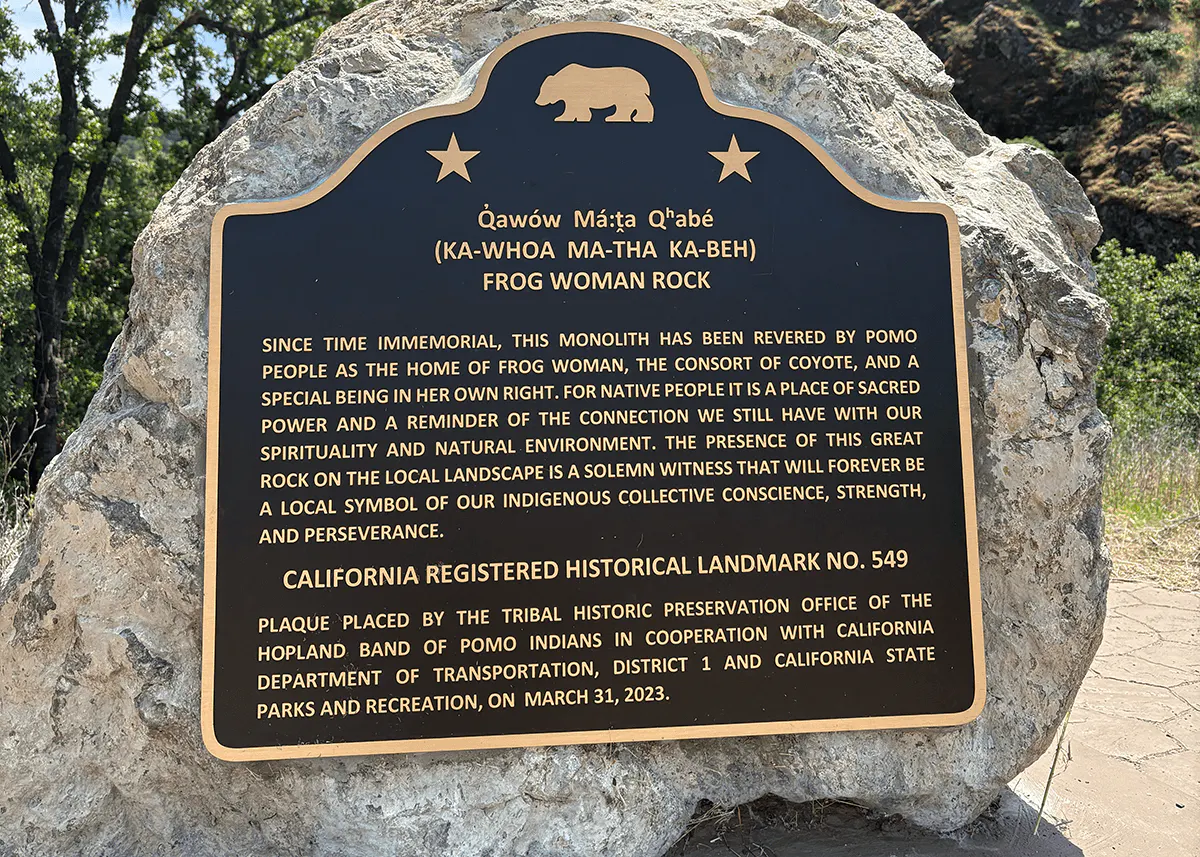
The second day began as the first ended: with another portage. By late afternoon, we reached Frog Woman Rock, a sacred site for the Pomo people. We carried around Frog Woman Rapid and launched just upstream of Boneyard Rapid, unaware that an easy line existed on the left.
With the sun glaring in our faces, we went right. Shallow water and cross-currents funneled us into the worst possible place. Our “bucket boat” began filling, sinking beneath us. As we scrambled to save it from wrapping, a chill breeze blew across the canyon. We stood mid-river, wet, tired, and wondering if we had reached the end.
And then, like something out of a story, a kayaker appeared on the horizon. A river spirit. With his guidance, we ferried to safety, portaged our boat one last time, and trudged uphill to Highway 101. Our backup driver Brian arrived in the twilight to haul us home.
That night, under the dim glow of headlights, the river reminded us: adventure isn’t always about miles made, but about the stories earned. And one thing was certain — when we returned, it wouldn’t be in the bucket boat. It would be in packrafts.
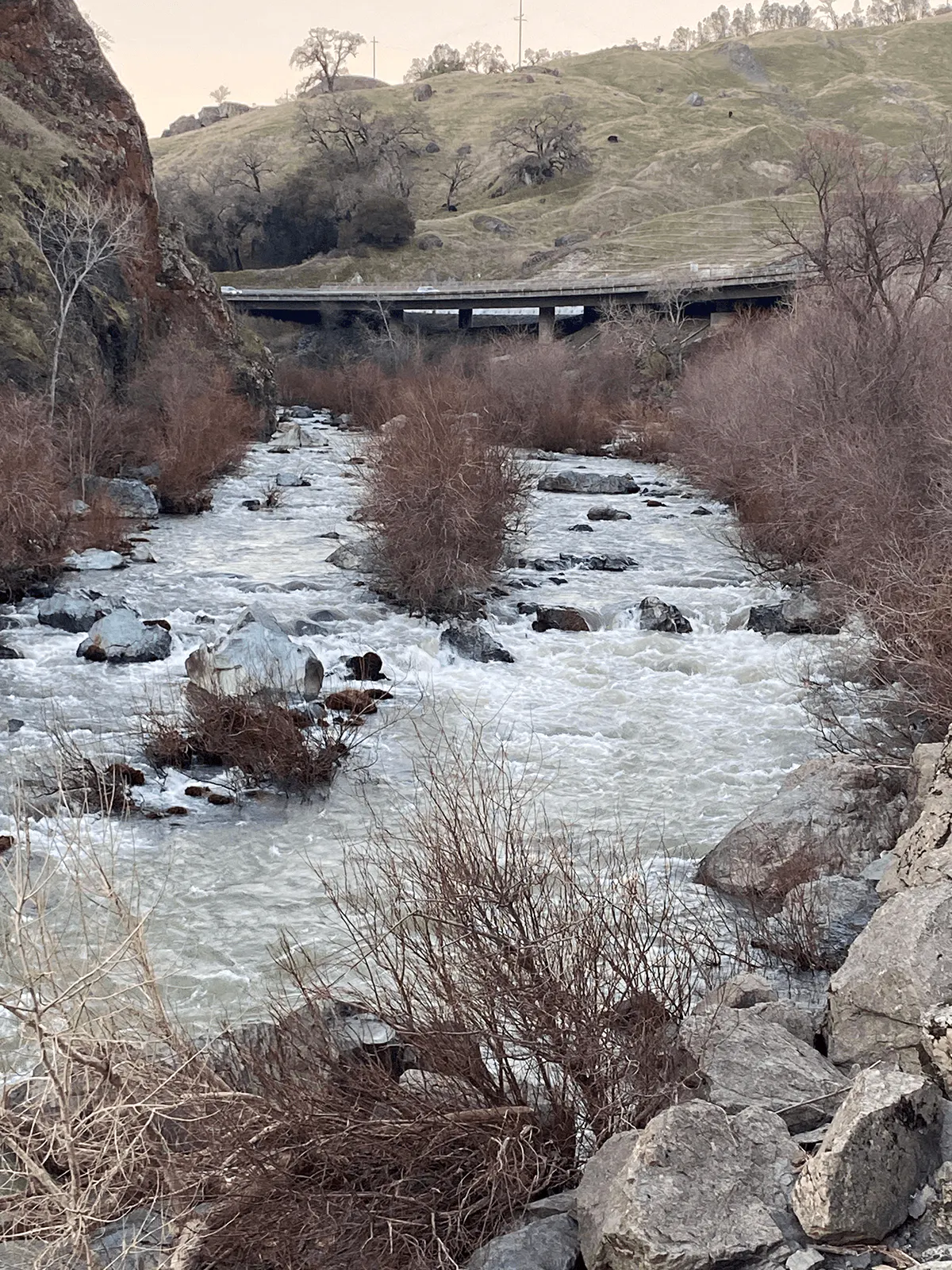
Boneyard Rapid, below Frog Woman Rock.
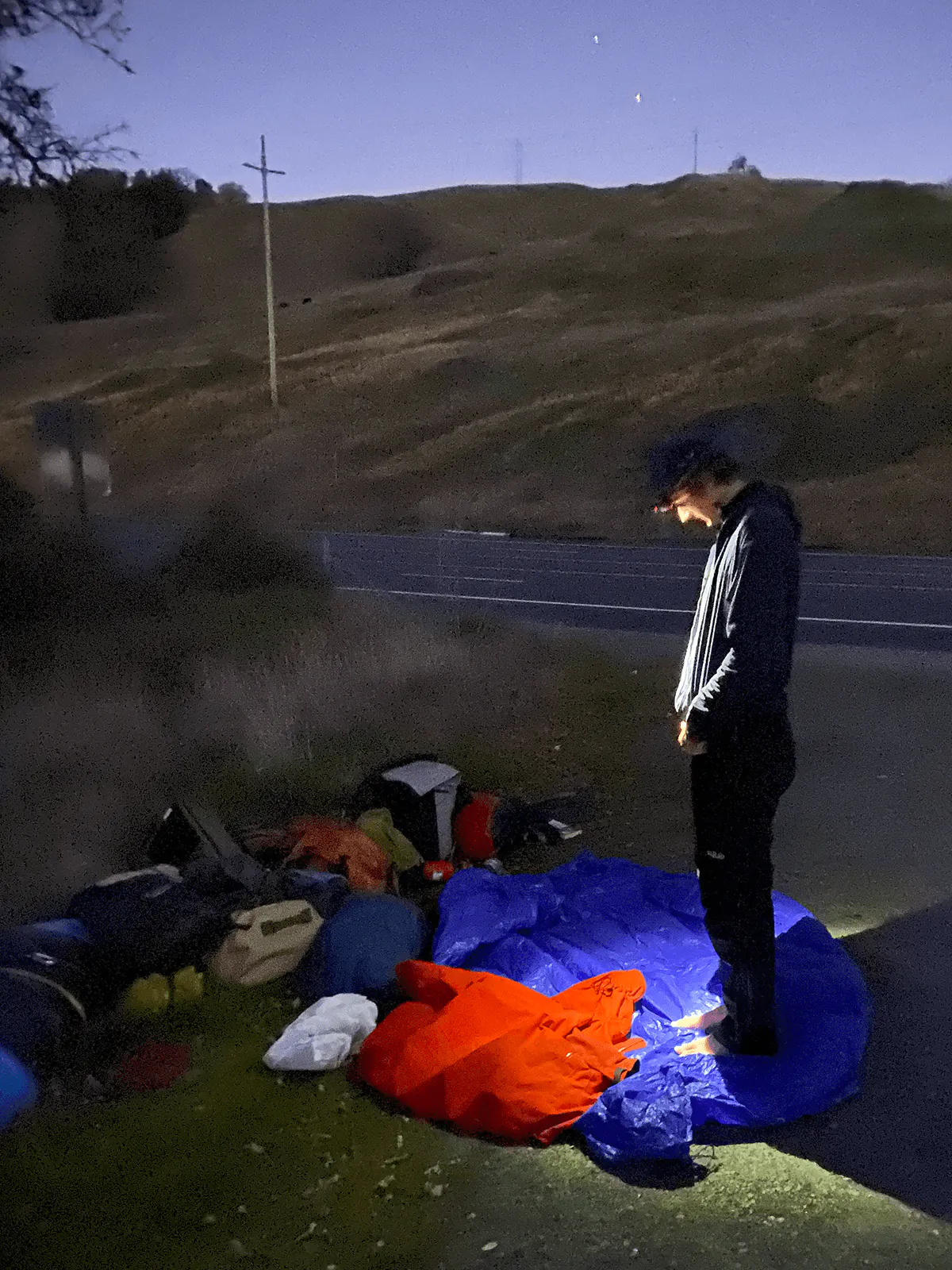
Waiting for our ride after portaging Boneyard.
Scouting and Reflection
Before we ever dipped a paddle, we had scouted the upper river — driving backroads, crossing private, state, and federal lands, and meeting fishermen, hikers, and hatchery workers. Standing on a gravel beach above the confluence of the East Fork and the Main Stem, we felt the layered weight of this watershed.
Native ground. Sacred ground. Political ground.
Who claims this river? PG&E? California Fish & Wildlife? The Army Corps of Engineers? Private landowners just downstream? The Pomo people who have always belonged here? The answer is as complex as the river itself, a confluence of competing priorities braided together where water meets gravel.
And everywhere, reminders of neglect. Cars smashed flat and embedded in banks like fossils from another age. Retaining walls cobbled together with bridge cables and railroad ties. Barbed wire strung haphazardly across bends. These scars clashed with the beauty of alders, oaks, and the songbirds flying overhead.
It was a junkyard river. A landscape of contradictions: resilience and destruction, wildness and waste. We often asked aloud: who thought this was a good idea?
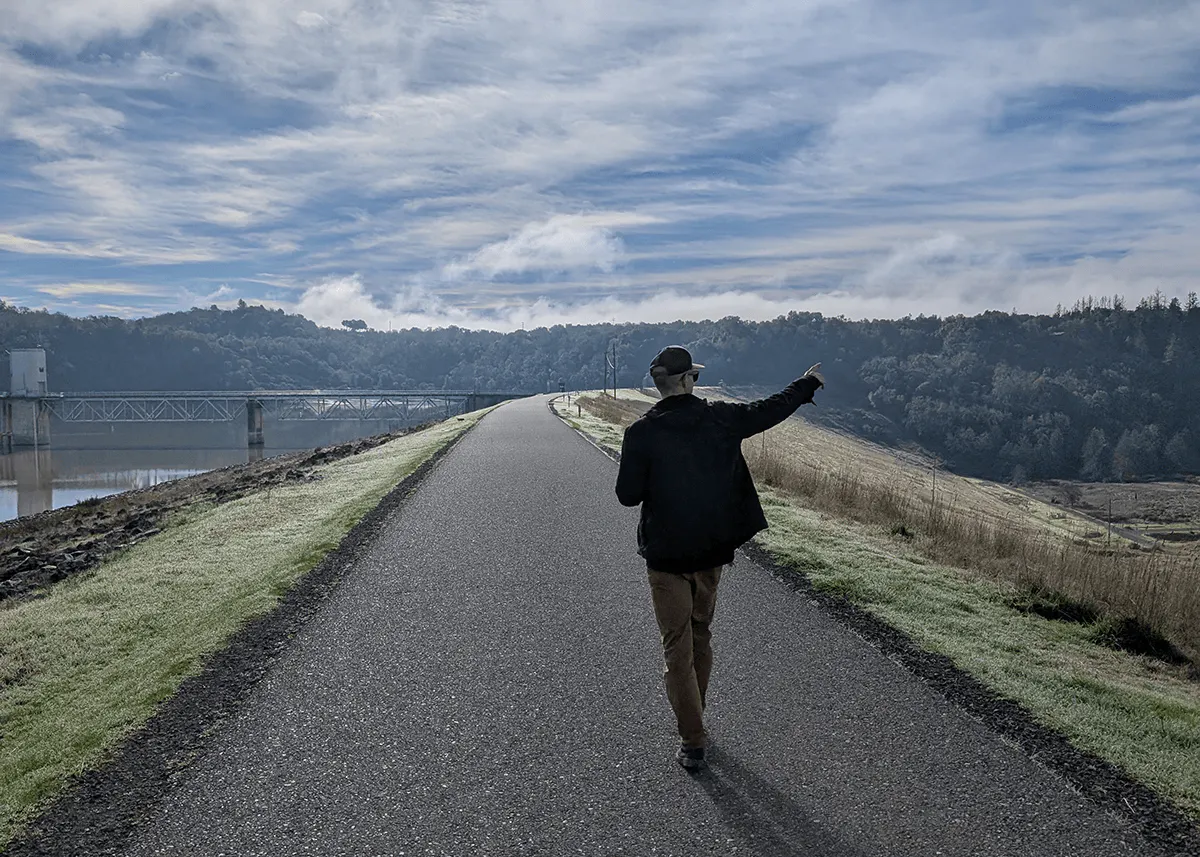
Scouting our put in location from Coyote Dam at Lake Mendocino.
Packraft Redemption
By May, we were ready for round two. Thanks to Rivers for Change and Alpacka Raft, we returned with the right boats. From the moment we slid our packrafts into the current below Frog Woman Rock, everything shifted.
At Boneyard Rapid, we paddled the easy left line, dry and upright. No swamping. No panic. Just pure fun.
And that’s the thing about packrafts — they changed the tenor of the entire expedition. What had once been dread became delight. Suddenly, portages were quick and almost playful. Instead of wrestling with a twelve-foot hulk of PVC, we could shoulder our boats with one hand and climb over strainers or scramble around logjams in minutes. Where the bucket boat demanded our constant vigilance, the packrafts gave us confidence: stable, forgiving, and maneuverable.
We laughed our way through Class II rapids, bouncing downstream with spray in our faces, remembering why we fell in love with rivers in the first place. These weren’t survival miles anymore — they were joyful miles. In the packrafts, we weren’t just pushing forward; we were flowing with the river.
The design of the boats made all the difference. Lightweight but tough enough for the junkyard scars of this river. Nimble in the shallows, responsive in pushy current. The self-bailing floors meant we could take a wave head-on and keep paddling instead of scrambling to bail. For the first time on this journey, we felt like we were exactly where we belonged: part of the current, not fighting against it.
That night, camp was on a gravel bar near Asti. We fell asleep to the sound of water over stones, surrounded by herons, kingfishers, dragonflies, and bats. In the morning, the sunrise spilled across misty hillsides as we packed our boats, ate breakfast on the gravel, and drifted the final miles to Geyserville.
Fifty-eight miles down. Fifty-seven to go. And now we had the right craft for the journey.
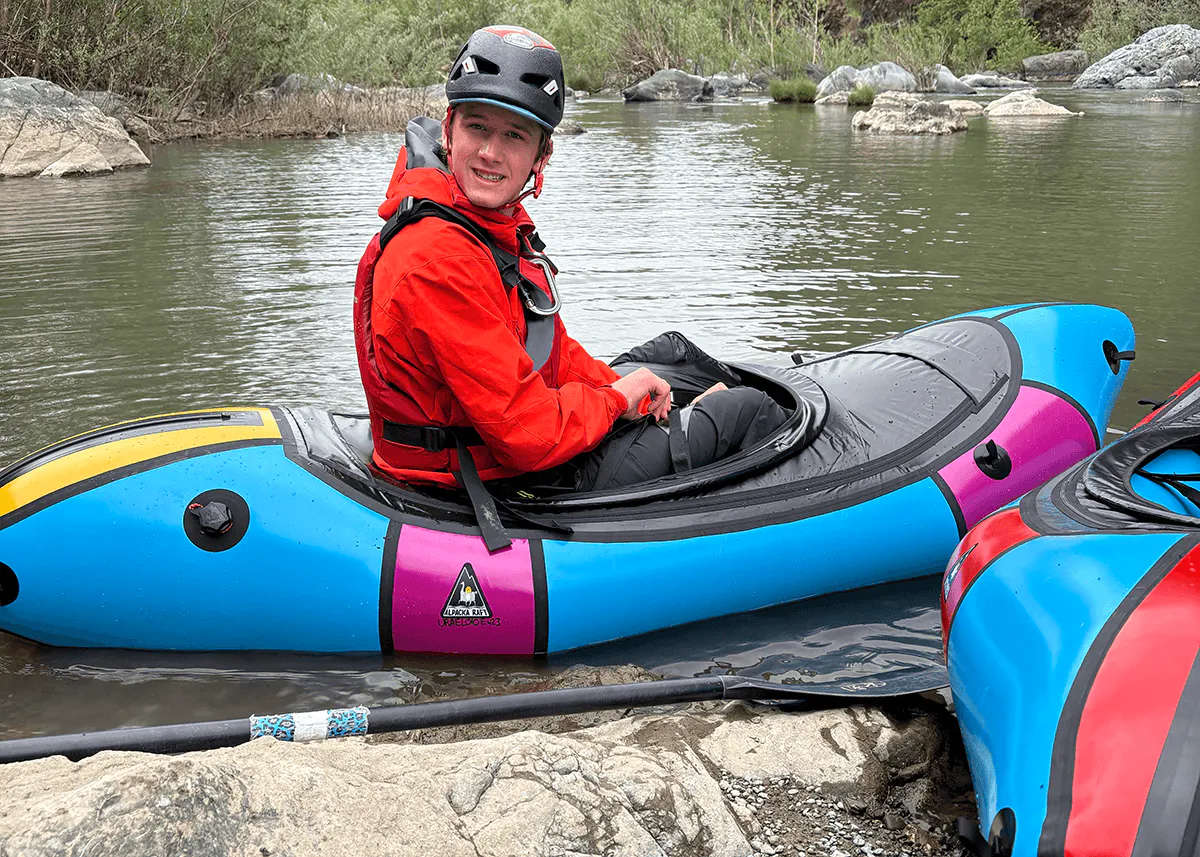
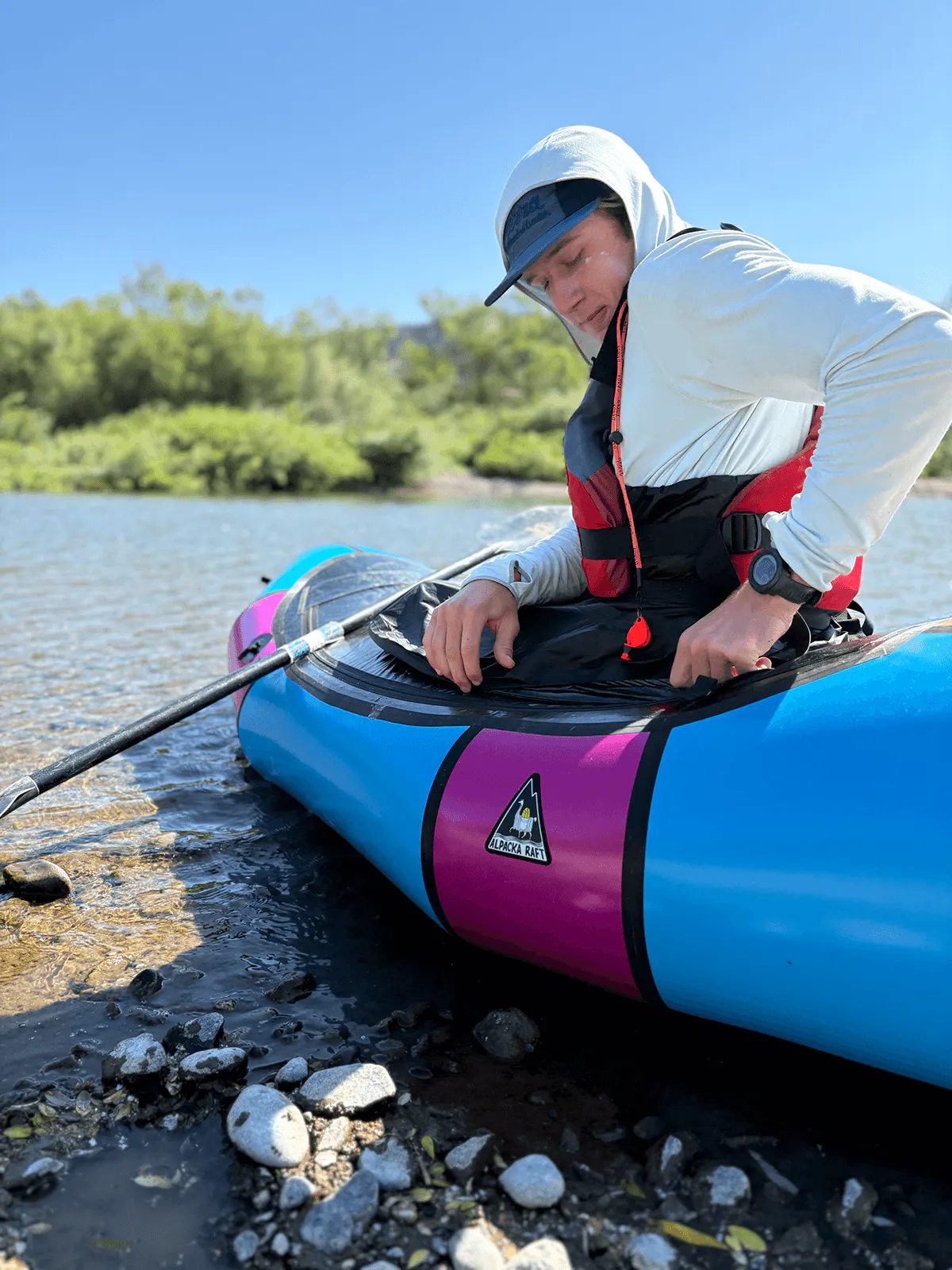
Putting in Day 4, Asti to Geyserville.
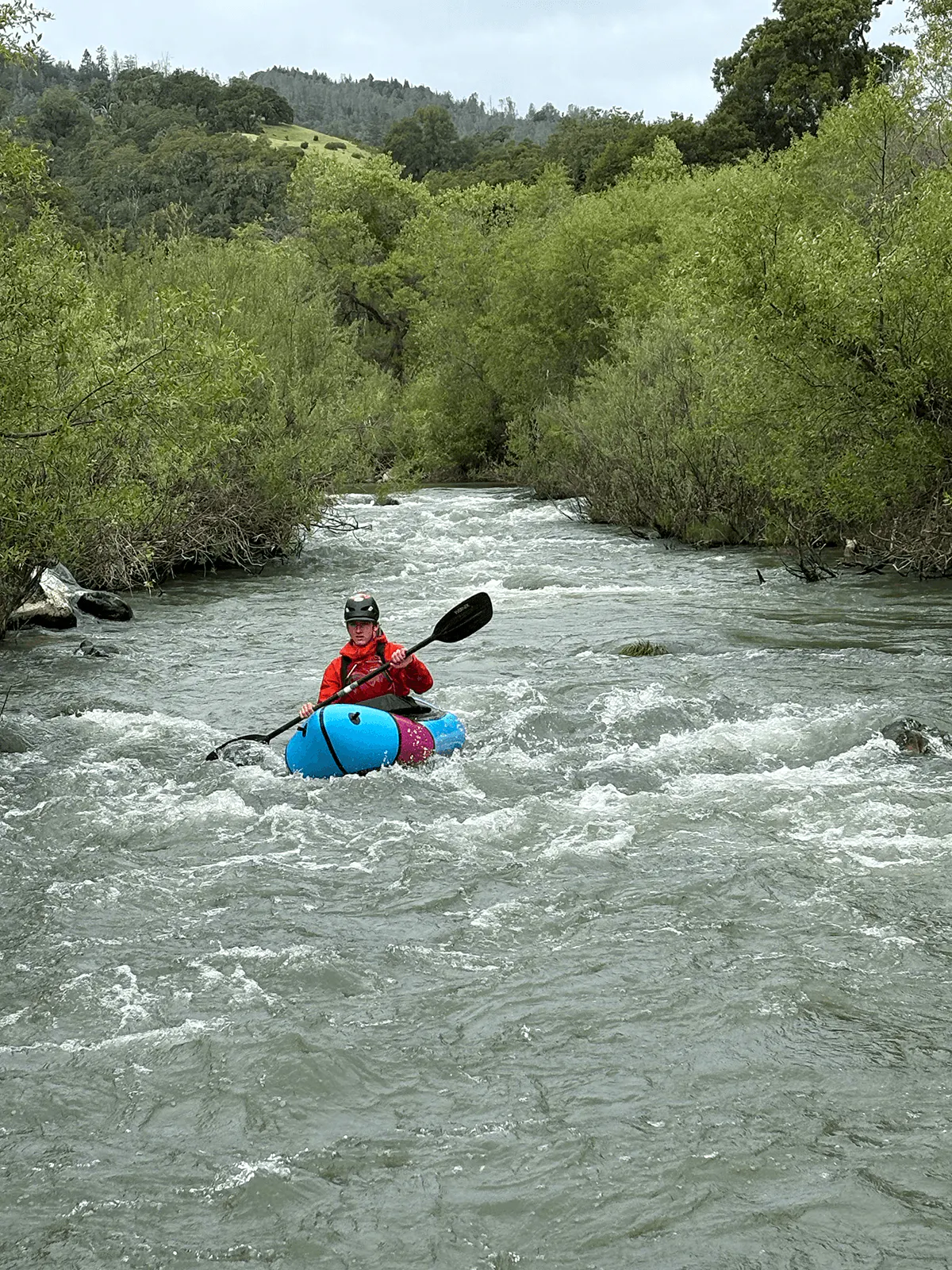
Why We Paddle
When I (Will) said yes to this journey, I found myself asking: how does my story fit with this river — where is our confluence?
Like the river, I want to be healthy and clear. I am living, changing, seeking a path of least resistance. And like the river, I feel drained by competing interests. I, too, feel the unrelenting busy-ness of a society gripped by an insatiable hunger for more.
For both of us, this trip is about more than adventure. It’s about listening — to the stories carried in steelhead runs and gravel bars, in floodplains and aquifers. It’s about acknowledging the scars, the resilience, and the hope that flows here still.
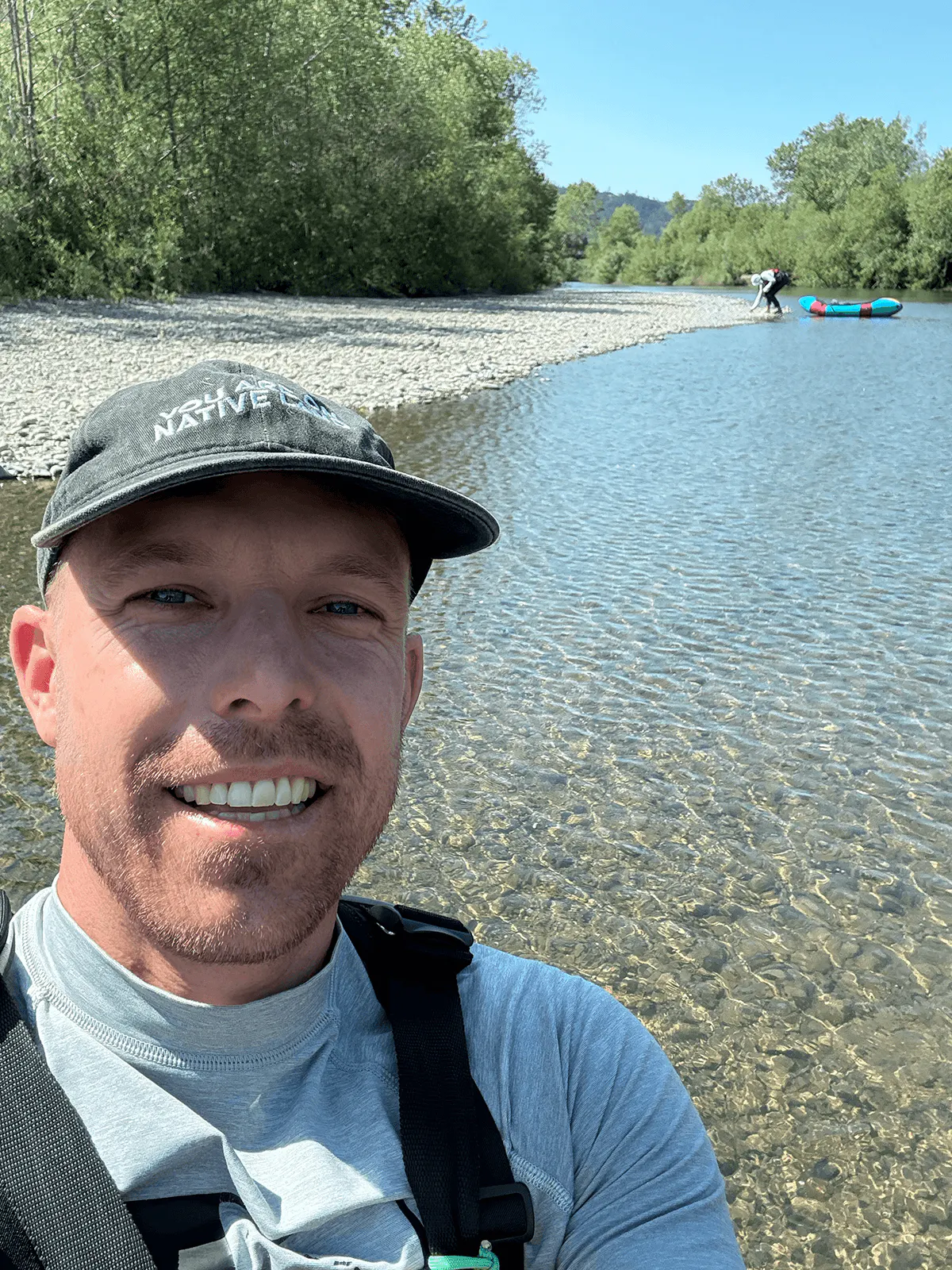
Enjoying the remote, inner corridors of the Russian between Cloverdale and Asti.
What’s Next
The final stretch is underway — 57 miles from Healdsburg to Jenner, where the Russian River meets the Pacific. And we’re planning to end this journey with a bang: a community paddle and river cleanup this October, a celebration not just of miles paddled, but of the river itself.
It’s our way of honoring the stories this river has told us, the challenges it has thrown our way, and the life it continues to give. Together with local partners, friends, and neighbors, we’ll gather at the water’s edge to paddle, pick up trash, and share in the joy of caring for this place.
Because the Russian River matters — to the fish fighting upstream, to the farmers tending their crops, to the families swimming at Memorial Beach, and to the Pomo and Coast Miwok people who have called it home since time immemorial. It matters to everyone who drinks from it, plays in it, and finds meaning along its banks.
And like any good river story, this one is still unfolding. To follow along with our journey — and to join us for the grand finale — visit: the Rivers of Change website
Because rivers, like stories, are best when shared.